At a wedding, my husband spent the whole night glued to his coworker — dancing, laughing, like I wasn’t even there. When someone asked if he was married, he smirked, “Not really. It doesn’t count when she’s… boring.” Everyone laughed. I didn’t. The next morning, he woke up alone — and found something on the table that made his face go pale.

“Is he married?” a woman asked, her voice loud enough for half the wedding reception to hear.
I watched as Asher, my husband of four years, glanced at me across the table, a flicker of acknowledgement in his eyes before he turned back to the stranger with that easy, devastating smile of his.
“Not really,” he said, the words casual, dismissive. “It doesn’t count when she’s not interesting.”
The words hung in the air, shimmering with cruelty, while Joyce, his coworker, laughed beside him, her perfectly manicured hand resting possessively on his arm. I sat there, my champagne glass frozen halfway to my lips, as our entire table erupted in laughter.
That was three hours ago.
Now, I stood in our Beacon Hill apartment at five-thirty in the morning, making his favorite breakfast. I replayed those words in my head, a mantra of humiliation, while I decided exactly how interesting my revenge would be.
The eggs sizzled in the pan—perfectly cooked whites with no crispy brown edges, just how Asher demanded them. My hands moved with an automatic grace through the routine I had perfected over four years of marriage. I mashed the avocado with exactly half a lime and a quarter teaspoon of salt, spread it on whole-grain toast browned to a specific golden shade, and poured his coffee—a dark roast with a single sugar and a splash of oat milk. It was the same breakfast I’d made yesterday and the day before, every single morning since we’d moved into this overpriced apartment that he insisted we needed for his image.
His first alarm blared at 6:15 AM, followed by the second at 6:20, and the third at 6:25. I listened to him groan and hit the snooze button again, knowing he would later blame me for not waking him up properly. Through the thin walls, I could already hear our neighbors’ television, the morning news droning on about the stock market. Asher would want to know the numbers, pretending to understand them over breakfast while he texted Joyce about their morning meeting.
My eyes landed on the receipt that had fallen from his jacket pocket yesterday. Two lattes from the expensive cafe on Newbury Street, timestamped at 3:47 PM. When had one coffee for him become two? When had “grabbing coffee with a colleague” become a daily ritual that never included me? I tucked the receipt back where I’d found it, letting him think I was still the oblivious wife who never checked pockets, never questioned his late nights, never wondered why Joyce’s name lit up his phone far more often than mine did.
At 6:45, Asher finally stumbled into the kitchen, his hair sticking up at odd angles, his thumb already swiping rapidly across his phone screen. There was no “good morning,” no kiss, just a grunt of acknowledgment as he slumped into his chair at our small dining table.
“Joyce needs me to review her presentation before the morning meeting,” he announced, not looking up. “Might be late tonight, too. The Morrison project is heating up.”
The Morrison Project. Everything was the Morrison Project these days. I set his plate in front of him, watching as he took a bite without tasting it, his eyes still glued to his phone. A notification popped up. It was Joyce, her face smiling in a tiny circle. He actually smiled back at the screen, a genuine, warm expression I hadn’t seen directed at me in months.
“I have that wedding tonight,” I reminded him, my voice even. “The Blackwood wedding. You promised you’d come.”
“What?” He finally looked up, his expression blank, as if I’d spoken in a foreign language. “Right. Yeah, of course. What time?”
“Six. The invitation has been on the refrigerator for three months.”
He was already back to his phone. “Joyce might come, too. She knows the Blackwoods through some charity thing. That okay?” He watched me, a flicker of something—a challenge?—in his eyes. He was already responding to her messages between bites. Did it even matter what I said? Joyce would show up regardless, wearing something tight and expensive, and Asher would light up like a Christmas tree the moment she walked in. It would be just like his company holiday party, and every team dinner that somehow never included spouses anymore.
“Sure,” I said, turning back to the sink. “The more, the merrier.”
At 7:15, he rushed out the door, leaving his half-eaten breakfast and dirty coffee mug on the table. “Late for Joyce’s presentation!” he called over his shoulder. Not goodbye, not I love you, not even a thank you. Just Joyce. Always Joyce.
I cleared his dishes, then sat at the table with my own coffee and opened my laptop. My Brookline Academy email showed seventeen new messages. My real life—the one where I was Miss Willow, respected and competent, where seventh graders listened when I spoke and parents thanked me for helping their children understand Shakespeare—was waiting for me. At noon, I would stand before my English class discussing The Great Gatsby with twenty thirteen-year-olds who thought they understood everything about love and betrayal.
Later, I would drive to Newton for my secret tutoring session with the Morrison twins—yes, those Morrisons. Their mother paid me three hundred dollars in cash per session, money I tucked away in a bank account Asher didn’t know existed. I’d told him I was saving for a surprise anniversary trip. In reality, I was building an escape fund. An independence fund. A just-in-case fund that was growing larger every week.
The apartment felt suffocating this morning. The exposed brick wall that had seemed so charming when we moved in now looked like the wall of a prison. I scrolled through Asher’s Instagram. There she was: Joyce in a team photo from yesterday’s lunch; Joyce laughing at a birthday celebration I hadn’t known about; Joyce standing next to my husband at a conference I thought he’d attended alone.
Tonight would be different, I told myself. Tonight, at the Blackwood wedding, surrounded by people who knew us as a couple, Asher would have to acknowledge me. For a few hours, I would exist as more than the woman who made his breakfast and paid half his rent.
I went to the bedroom to choose my outfit. The black cocktail dress hanging in the closet would do. Simple, elegant. Boring. As I stood there, those words from three hours in the future echoed backward through time: It doesn’t count when she’s not interesting.
The valet took forever to bring our car, and Asher checked his phone every thirty seconds, his jaw tightening. The Blackwood wedding venue was a converted mansion, its marble columns glowing against the evening sky.
“Joyce just texted. She’s already inside,” Asher said, practically bouncing on his heels. “We need to hurry.”
I adjusted my black dress, the fabric suddenly feeling cheap. Other couples were arriving, the husbands offering their arms to their wives. Asher was already ten feet ahead of me.
The ballroom was a sea of ivory and white orchids. I spotted familiar faces—from Asher’s office, from college. Everyone looked polished, happy, coupled.
“Willow! Finally!” Sarah, my college roommate, appeared in emerald green silk, pulling me into a hug that lasted a beat too long. “You look tired, honey,” she whispered. “Everything okay?”
Before I could answer, Asher was scanning the room over my shoulder, his focus entirely elsewhere. Sarah’s husband, David, ever helpful, pointed toward the bar. “She’s over by the bar. Joyce, right? From your office. She was asking about you.”
Asher’s transformation was instant. His face lit up, his shoulders straightened, and suddenly he looked like the man I’d married—animated, engaged, present. Except none of that energy was for me.
“I’ll be right back,” he said, already moving. “Just need to say hello.”
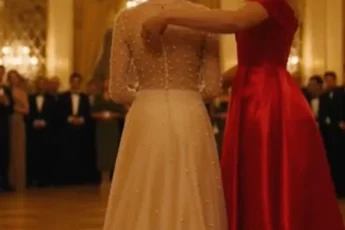
Sarah and I watched him weave through the crowd. I was watching him reach Joyce. She wore a crimson dress that should have been garish, but on her, it looked like confidence. When Asher approached, she turned toward him like a flower finding the sun. I watched his hands linger on her shoulders as he helped her with a silver wrap that didn’t need adjusting.
We found our table, number twelve, tucked in a corner. Asher’s place card sat next to mine, but his chair remained empty through the salad course, the speeches, and the first dance. When the DJ invited all guests to the dance floor, Asher materialized with Joyce in tow.
“They’re playing our song!” she exclaimed. I wondered when they had developed a song.
“Just one dance,” Asher said, not really asking, already leading her away. “You don’t mind, right, Willow?”
Did I mind? The question hung there for a half-second before they were gone, swept into the crowd. I watched them move together with an ease that spoke of practice. One dance became two. Two became three. By the fourth song, other guests had started to notice. Conversations paused; eyes tracked their movement.
That’s when Margaret Blackwood, the mother of the bride, descended on our table like a perfumed vulture. “Darling,” she said, settling into Asher’s empty chair. “I don’t think we’ve properly met. I’m Margaret, and you are?”
“Willow Richardson,” I managed.
“How lovely.” Her voice carried, meant to be overheard. “And that handsome man dancing with the blonde? Is he with you?”
I felt the blood drain from my face.
“Such a beautiful couple they make,” Margaret continued, loud enough for the next table to hear. “The way they move together, you’d think they’ve been dancing for years. Is he married, dear?”
The question hung in the air just as Asher and Joyce returned to the table, both flushed from dancing. They were laughing, oblivious to the small audience that had gathered.
Margaret pressed on, her voice now carrying to three tables over. “Is your handsome friend married?”
Asher heard her. I saw the moment the question registered. I watched him glance at me—his wife—before turning back with that charming smile. “Not really,” he said, his voice carrying across our corner of the ballroom. “It doesn’t count when she’s not interesting.”
The laughter erupted. Joyce giggled. Margaret shrieked with delight. Even the waiter refilling water glasses smirked.
I stood slowly, my movements deliberate. The champagne glass made a soft clink as I set it on the table. Every eye was on me, waiting for tears, for drama, for the boring wife to finally provide some entertainment.
“Excuse me,” I said, my voice as steady as granite. “I need some air.”
“Was it something I said?” Joyce’s voice followed me.
“Don’t worry about it,” Asher replied, loud enough for me to hear. “She’s always dramatic at events.”
The bathroom was mercifully empty. I locked myself in a stall and stood there, breathing. No tears came. Instead, a strange calm settled over me, like watching storm clouds clear after years of rain. A decision had crystallized. I walked back through the ballroom without stopping. The valet seemed surprised to see me alone.
“Leaving already, ma’am?”
“Yes,” I said, handing him the ticket. “Just me.”
The drive home should have taken twenty minutes. I made it last an hour, winding through quiet streets. At a red light, I remembered the acceptance letter from Harvard’s PhD program. I’d been twenty-six, brilliant, according to my professors. But Asher had just gotten into business school. “Your career is more flexible,” he’d said. “You can go back to school anytime.” That was five years ago.
By the time I reached our apartment, the strange calm had transformed into something harder, colder. Purpose, maybe. Or just the absence of hope, finally bringing clarity.
Our apartment was dark and silent. I moved through it like a ghost with an agenda. In the bedroom, I pulled my overnight bag from the closet. My grandmother’s pearls went in first, then her china, which Asher had wanted to sell. These plates had survived the Depression, two wars, and three moves. they weren’t staying here to watch my marriage die.
My laptop was next. I sat at the kitchen table and systematically downloaded three years of financial records. Our joint checking account, the credit cards, his spending patterns—restaurant charges at places I’d never been, hotel rooms in the city when he was supposedly at conferences, and a charge for $3,200 at Tiffany’s last month that had produced no blue box for me. I photographed everything, every receipt, every lie translated into digital evidence.
At eleven o’clock, I sat at our kitchen table with his keychain. The apartment key slid off first, then the mailbox key, the gym key. I kept removing them until only his car key remained. His laptop was password-protected, but he used the same three in rotation. I logged into our Netflix account and changed the password. Then Hulu, Amazon Prime, the grocery delivery service—every shared digital space we’d created, I locked him out of.
His LinkedIn profile was the masterpiece. I didn’t delete it or write anything crude. I just made a simple update to his current position: Currently exploring new opportunities after personal matters with a colleague affected team dynamics. Vague enough to be professional, specific enough to raise red flags.
Then, I found the business card Marcus had given me at last year’s holiday party. Joyce’s fiancé, deployed for six months, completely unaware. I uploaded the photos I’d taken tonight—Asher’s hand on Joyce’s waist, her head thrown back in laughter—and typed a simple subject line: Thought you should see this.
My wedding ring came off easier than I expected. I placed it on Asher’s pillow with a note: You’re right. It didn’t count. Not interesting enough to fight for someone who was never really mine.
By 11:47 PM, I was pulling into my sister Grace’s driveway in Burlington, Vermont. The wine was already breathing on her kitchen counter. She took one look at my face and poured two generous glasses. We sat at her farmhouse table.
“He said I wasn’t interesting,” I told her. “At a wedding. To everyone.”
Grace’s knuckles went white around her wine glass, but she just nodded. She’d never liked Asher. I should have listened. I turned my phone off completely and slept like the dead.
The assault began at exactly 7:03 AM. Grace knocked gently, holding my phone. “It’s been ringing non-stop since six-thirty.”
I powered it on. The screen exploded: 43 missed calls, 19 voicemails, 67 texts. The first voicemail was timestamped at 6:31 AM. “Willow, what the hell did you do to the locks? This isn’t funny. I’m locked out.” His voice was more confused than angry. By 7:01, it was full rage. “You’re insane! You can’t just lock me out and take my money! This is illegal! You’re going to regret this, Willow!”
I deleted the rest without listening. Then, buried among the texts, one from an unknown number: This is Joyce. I don’t know what you told Marcus, but you’ve ruined everything. I hope you’re happy.
My phone rang again. Asher, from the lobby keypad. This time, I answered.
“Finally! Willow, what is wrong with you? Open the door right now!”
“Good morning to you, too,” I said, taking a sip of coffee.
“Where are you? The locks don’t work.”
“I removed your access. You’ll need to make other arrangements.”
“Other arrangements? This is my apartment!”
“Actually, it’s Mr. Kolski’s apartment. As of this morning, you’re no longer on the lease. Check your email. Thirty days’ notice to vacate.”
Silence. “That was a joke, Willow! I was drinking! Joyce thought it was funny!”
“Is Joyce taking your calls this morning?” I asked.
Another pause. “She’s… dealing with something. Marcus. How could you send those photos to Marcus? He’s serving our country and you—”
“He’s serving our country while his fiancée plays games with attached men. He deserved to know. You’ve ruined everything. My job—”
“Interesting people handle their own problems, Asher. I have to go. My sister’s making breakfast.”
“Willow, wait—” I hung up.
By 9:00 AM, my phone was buzzing with a different kind of call. It was Sarah, breathless with gossip.
“Willow, you are not going to believe this. Joyce has done this before. Three times! At her last firm, she caused a whole lawsuit between two married executives. The firm transferred her to Boston to avoid the scandal. Asher was just her latest target.”
“We weren’t separated,” I said numbly. “I made him breakfast yesterday.”
“I know, honey. But here’s the best part. Marcus showed up at their office an hour ago. He got emergency leave and flew back from Germany overnight. Walked right into the downtown office with a stack of printed emails and photos. David said security had to escort Asher out because Marcus was ready to fight.”
My coffee cup froze halfway to my mouth.
“Is Asher—?”
“Why do you care? But he’s fine. Humiliated, but fine. Joyce, though—she completely threw him under the bus. Told everyone Asher had been pursuing her aggressively, that she felt pressured. She’s claiming he harassed her.”
The boring wife he dismissed had dismantled his entire existence in less than twelve hours.
My own parents called next. “Sweetheart,” my mother began, “Asher called us. He explained about the misunderstanding.”
“Dad’s voice joined the call. “Willow, honey, men sometimes say foolish things. You have to ask yourself, did you try hard enough to keep his interest?”
The words hit like ice water.
“Relationships require effort,” he continued. “Maybe you got too comfortable. Men need excitement, challenge. Maybe this Joyce woman just offered something you didn’t.”
“I gave up my PhD for his career!”
“Don’t be rash,” my mom said. “You’re thirty-two, Willow. Starting over at your age isn’t easy.”
I hung up, my hands shaking with rage. My own parents thought I should have tried harder to be interesting for a man who was openly involved with another woman.
That evening, I got another call. An unknown Boston number. “Hello, Mrs. Richardson? This is Margaret Blackwood.” I braced myself.
“Dear, I owe you an apology,” she said, her voice softer now. “What happened at Susan’s wedding was unconscionable. However, I thought you should know that several guests recorded the incident. The video is making the rounds through Boston society. Someone added a caption: How Not to Treat Your Wife. Your husband has become quite infamous.”
She hung up, leaving me stunned. Margaret Blackwood, the queen of drama, had just become an ally.
An hour later, another call. A military prefix. “Is this Willow Richardson? This is Marcus, Joyce’s former fiancé. You did me a favor. I’m calling because I think we can help each other. I’ve been going through Joyce’s emails. There are messages between her and your husband. They called us ‘convenient.’ Said we were stable but boring. There’s one thread where your husband promises to recommend Joyce for a senior position in exchange for her continued discretion. I’m sending you everything.”
Minutes later, an email arrived with a zip file labeled EVIDENCE.
The next morning, the principal at Brookline, Dr. Martinez, was waiting for me. “Willow, word travels,” she said gently. “Several parents have reached out expressing support. And Andrea Williams, a partner at Williams, Frost & Associates, is offering pro bono legal services for your divorce. Her exact words were, ‘Women need to support women who know their worth.’”
That afternoon, I met Andrea Williams. She was tall, commanding, a force of nature. “I’ve reviewed the information,” she said, spreading documents across her conference table. “The public humiliation, the financial records, the evidence from Marcus Torres, the video… we have a solid case for a fault-based divorce with significant penalties.”
“I don’t want his money. I just want out.”
“Noble, but foolish,” she said. “He’s been spending marital assets on his affair. You are entitled to compensation. Let me handle the strategy.”
That night, I went back to the apartment to get the last of my things. In the back of his closet, I found a leather journal. I opened it to a random page: Year 3 with W. Maintains status quo until senior partnership. She provides stability, respectability. W too content with teaching. No ambition. 5-year exit strategy on track.
My initials reduced to a letter. Our marriage reduced to a business plan. The last entry was dated two weeks ago: W still clueless. Joyce agrees to Denver after my promotion. Fresh start. No dead weight.
I photographed every page. This wasn’t just his private thoughts. This was a written confession of fraud.
The mediation meeting was three weeks later. Asher looked smaller, his suit wrinkled. Joyce was absent. His lawyer, a tired man named Gerald, opened with demands for spousal support.
Andrea actually laughed. “Your client wants support? Let’s review.” She spread bank statements across the table. “Mrs. Richardson paid seventy percent of household expenses during your client’s MBA program.” She highlighted line after line.
“That was a mutual investment in their future,” Gerald started.
“A future he was planning to abandon?” Andrea produced the journal, photocopied and bound. She read his words aloud: “Exit strategy from W.” “Joyce shows more promise for power couple dynamic.”
Gerald’s face paled. Asher’s went red.
“This is ridiculous!” Asher exploded. “She contributed nothing! I was building our future while she played with seventh graders! She’s bitter because I found someone actually interesting!”
“Mr. Richardson,” the mediator interrupted, “you’ve just admitted to the affair on record.”
Andrea smiled like a shark. “Would you like to discuss the forty-seven thousand dollars in marital assets spent on this interesting woman? Hotels, dinners, jewelry from Tiffany’s.”
“You destroyed your own reputation,” I said, speaking for the first time, my voice calm. “I just stopped covering for you.”
Before he could respond, Andrea’s phone buzzed. Her shark smile widened. “Interesting timing. Joyce Williams just released a statement. She’s claiming Mr. Richardson’s persistent advances created an uncomfortable work environment and that he leveraged his senior position to pursue her. She’s claiming harassment.”
“That’s a lie!” Asher stood, his chair scraping against the floor. “She pursued me!”
Gerald closed his briefcase with a sound of defeat. “We need to recess.”
As we left, Asher grabbed my arm. “Willow, please, believe me.”
I looked at him. The golden boy was gone. In his place stood a desperate man. “I don’t know you at all,” I said quietly. “I never did.”
Six months later, the divorce was final. Burlington had become home. I had a small apartment with mountain views, a new teaching position, and a thriving tutoring practice. One Tuesday morning, I was grading essays at a local cafe when a familiar voice made me look up.
“Willow! It is you!” Margaret Blackwood stood there in a burgundy wool coat. “I suppose you haven’t heard the developments,” she said, settling into the chair across from me. “Asher is living in his childhood bedroom. He’s working at his uncle’s friend’s car dealership—filing paperwork in the back office. And Joyce? Transferred to Denver, then quietly let go three months later. Last I heard, she was bartending and trying to start a lifestyle blog.”
That Thursday, during a faculty video call, Dr. Martinez made an announcement. “I have wonderful news. The board has approved our recommendation. Willow Turner, would you please accept the position of English Department Head?” My colleagues erupted in congratulations. It was a position I’d never even considered when I was managing Asher’s ego, making sure I was never too successful, never too visible. Brilliant. Not boring. Brilliant.
That Saturday, I was at a reading at our local bookstore when a man stood to ask a question. He was a professor, Daniel Shaw, and his answer was thoughtful and nuanced. After the reading, we struck up a conversation about books and teaching. He listened intently, laughed at my jokes.
“Would you maybe want to continue this over coffee?” he asked. “I know a place that makes the best maple latte in Vermont.”
I looked at him, at his kind eyes and genuine smile, and felt a warmth spread through my chest that had nothing to do with revenge or vindication. It felt like hope.
“I’d like that,” I said. “I’d like that very much.”